YouTube
What Faceless AI Creators Copy From YouTube's Giants
Hooks, pacing, visual style, length and title patterns from Veritasium, CoComelon, Boring History, Sleepless Historian, Ifverse, Ryoga, Swarm Theory and GoDocs, with today's channel numbers and how to rebuild each format with AI.
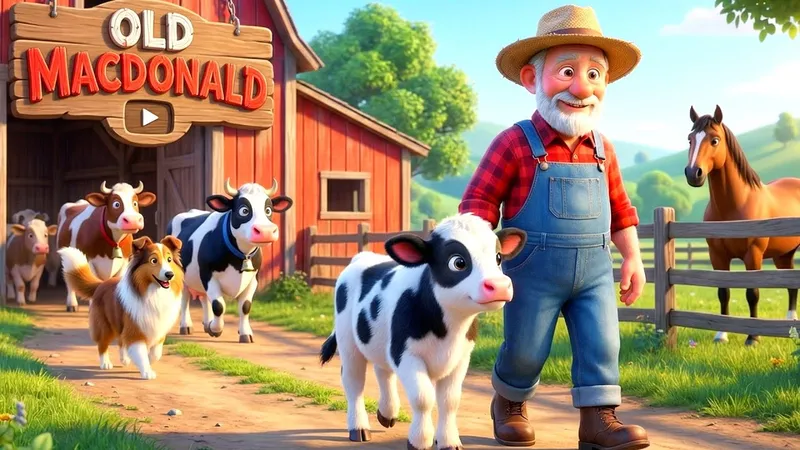 120K SubscribersPeekaboo Songs, AI Nursery Cartoons
 Adavia Davis, Faceless Channel Network
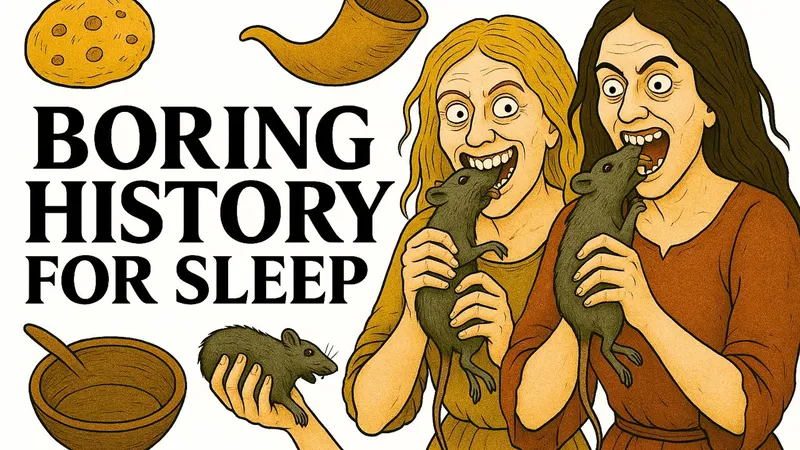 716K SubscribersSleepless Historian, Sleep History
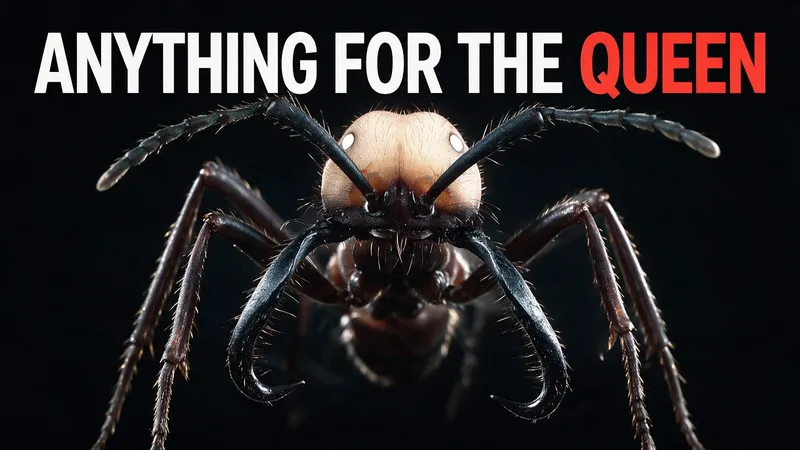 3.56M ViewsSwarm Theory, Insect Documentaries
Platform rules change often. Requirements below were checked against official pages in October 2026; always confirm on the linked source before applying.
Faceless AI creators rarely invent a format from scratch. They borrow the hooks, pacing and title patterns that the biggest channels have already tested, then make them with AI tools. Below are eight reference channels, with public numbers we checked on YouTube on Oct 20, 2026, the traits worth copying and a way to rebuild each format with AI.
Important: none of these channels says it uses AI, and we do not claim it does (for Sleepless Historian we note what a news report said, below). The "How to Recreate" sections are our suggestions only. Copy the format, never the content: write your own scripts, make your own visuals and check every fact.
Veritasium: The Curiosity Question
| Channel | @veritasium |
|---|---|
| Subscribers | 21.4M |
| Total views | 4,680,895,501 |
| Videos | 541 |
| Top video | "Why Are 96,000,000 Black Balls on This Reservoir?" (May 2019, 12:07): 112,793,007 views |
| Who makes it | An on-camera human science host with a production team. Not a faceless or AI channel. |
Format Traits Worth Copying
- Hook: a strange, concrete question in the title and the first seconds ("Why are 96 million black balls...?")
- Title pattern: "Why..." plus a surprising specific number or object
- Pacing: sets up a mystery, gives the wrong answer most people believe, then reveals the real one
- Visual style: real locations, experiments and clean diagrams
- Length: long explainers, often 12 to 30+ minutes
How to Recreate the Format With AI (Our Suggestion)
This is our suggestion for a faceless creator, not how this channel is made.
- Write the script around one "why" question and a common wrong answer, then the real answer with sources.
- Use an AI voice such as ElevenLabs for narration, or your own voice.
- Make diagrams and b-roll with image and video tools such as Midjourney, Kling or Veo, plus real footage you have rights to.
- Cut a Short from the reveal with Opus Clip and caption it with Submagic.
CoComelon: Repetition for Kids
| Channel | @CoComelon |
|---|---|
| Subscribers | 203M |
| Total views | 228,827,856,667 |
| Videos | 2,157 |
| Top video | "Wheels on the Bus" (3:49): about 9.6 billion views (YouTube's rounded count) |
| Who makes it | A studio 3D-animation channel owned by Moonbug Entertainment. Not an AI channel. |
Format Traits Worth Copying
- Hook: songs children already know, so the first seconds feel familiar
- Title pattern: song name, then the channel name and "Nursery Rhymes & Kids Songs"
- Pacing: short songs (about 3 to 4 minutes) built on repetition and simple actions
- Visual style: bright, rounded 3D characters and a recurring family
- Length: short videos plus long compilations
How to Recreate the Format With AI (Our Suggestion)
This is our suggestion for a faceless creator, not how this channel is made.
- Kids' content has strict rules: mark it "made for kids", and YouTube turns off personalized ads and comments on it, so it earns less per view.
- If you try a kids' format, write original songs (public-domain rhymes are safer than copying), keep characters consistent and review every frame for safety.
- AI music tools can draft melodies; check each tool's license for commercial use.
- Low-effort, mass-produced AI kids' videos are a known problem; YouTube does not monetize repetitive, mass-produced content.
The AI Version of the CoComelon Formula: Peekaboo Songs (@pekaboosongs, 120K subscribers and 58,328,991 views on YouTube, checked Oct 20, 2026) uses a recurring cartoon cast and a Problem → Rescue → Happy Ending story. An X account that sells content services, @Ytautomation6, described it as an AI kids-story channel (Idea → Script → Image → Animate → Edit → Upload) and estimated about $2.3K from 11.5M views at a $0.20 RPM; that is their estimate and description, not confirmed by the creator. If you try this, keep stories gentle, age-appropriate and honest for children.

Boring History: Sleep Documentaries
| Channel | @officialboringhistory |
|---|---|
| Subscribers | 38.9K |
| Total views | 3,275,220 |
| Videos | 400+ |
| Top video | "How Vikings Survived Arctic Winters Without Fireplaces | Boring History for Sleep" (Aug 2025, 2h26m): 235,715 views |
| Who makes it | A sleep-history channel. It does not say how it is made, and no source we found says it uses AI. |
Format Traits Worth Copying
- Hook: a calm promise ("for sleep") plus a curious everyday-life question
- Title pattern: "How [people] survived [hardship]" or "Daily life in [year]"
- Pacing: slow, steady narration with long-held images
- Visual style: painted, historical-looking stills with gentle motion
- Length: very long: two hours or more, which builds watch time
How to Recreate the Format With AI (Our Suggestion)
This is our suggestion for a faceless creator, not how this channel is made.
- Research and outline one period of daily life, and fact-check it; sleep audiences still notice errors.
- Draft with an AI writer, then edit heavily so the script is yours.
- Narrate with a calm AI voice from ElevenLabs or Fliki, and pair it with consistent painted stills.
- Add slow pans in CapCut; keep it simple and steady.
The "sleep history" genre has documented AI channels: see our case on a network of AI faceless channels including a sleep-history channel (as reported by Fortune).

Sleepless Historian: Two-Hour Sleep-History Narrations
| Channel | @SleeplessHistorian |
|---|---|
| Subscribers | 716K |
| Total views | 47,365,381 |
| Videos | 377 |
| Top video | "Boring History For Sleep | Why You Wouldn't Last a Day in Medieval Times and more" (2h07m): 4,318,415 views |
| Who makes it | The channel does not say how it is made. 404 Media (Sep 3, 2025) named it among sleep-history channels its reporter judged to be AI-generated; that is the reporter's assessment, not a disclosure by the channel. It also runs a Spotify podcast. No earnings have been disclosed, so we do not estimate them. |
Format Traits Worth Copying
- Hook: a fixed "Boring History For Sleep" prefix plus "Why you wouldn't last a day in [era]"
- Title pattern: "Why it sucked to be a [medieval job]" and "and more", promising a compilation
- Pacing: soft, even narration with no music spikes
- Visual style: one recognisable illustrated thumbnail style, with the series name in big letters
- Length: about two hours per video, and the same audio reused as a podcast
How to Recreate the Format With AI (Our Suggestion)
This is our suggestion for a faceless creator, not how this channel is made.
- Pick one era and write a fact-checked outline of 10 everyday-life topics; accuracy is the main criticism of this genre.
- Narrate with a calm AI voice from ElevenLabs or Fliki, and keep one illustration style with Midjourney.
- Publish the same audio as a podcast for a second audience.
- Disclose AI narration if a viewer could mistake it for a real person, and add your own research so it is not mass-produced.
Full breakdown: Sleepless Historian case. Source tip: the channel was highlighted on X by @eddieeizner, whose post gave 47M total views and asked people to guess its earnings; it gave no earnings figure.
Ifverse: Stick-Figure "What If" Stories (Fast-Growing Format)
| Channel | @IfverseTales |
|---|---|
| Subscribers | 45.1K |
| Total views | 6,496,781 |
| Videos | 14 |
| Top video | "What If Your Reaction Time Was 10x Faster?": 4,081,055 views, about two weeks after upload |
| Who makes it | A fast-growing channel (created Jan 2022) whose latest videos, including its top one, were posted within about two weeks of Oct 20, 2026, with simple 2D stick-figure stories about one character, Leo. The channel does not say how its videos are made, and we found no first-hand source on its method or earnings. |
Format Traits Worth Copying
- Hook: one impossible premise in the title: "What if you had 500 IQ?"
- Title pattern: "What If [one superpower or rule change]?" and multi-part sequels ("Part 2", "Part 3")
- Pacing: 6- to 12-minute stories with a problem in each scene
- Visual style: flat black stick figures, bold 2-3 word thumbnail text ("TOO FAST.")
- Length: mid-length, plus Shorts cut from the same story
How to Recreate the Format With AI (Our Suggestion)
This is our suggestion for a faceless creator, not how this channel is made.
- Write a 10-scene story around one "what if" rule, with a recurring character and a cliffhanger for Part 2.
- Simple 2D motion graphics can be built in code with tools such as Remotion or Manim, using an AI coding assistant like Claude or Cursor to write the scenes.
- Voice it with ElevenLabs, then cut Shorts with Opus Clip or JustClip.
- Keep the story original; a template plus a new premise each time can look mass-produced to YouTube.
We list Ifverse for its format only. It is very new, so its numbers may change fast.

Ryoga: Anime-Style Fitness Advice (Fast-Growing Format)
| Channel | @ryoga.training |
|---|---|
| Subscribers | 55.1K |
| Total views | 8,442,752 |
| Videos | 8 |
| Top video | "How To Force Your Skinny Arms To Grow": 6,587,286 views |
| Who makes it | A faceless fitness channel (joined Aug 18, 2026) that pairs muscle-building advice with anime-inspired visuals. It does not say how its videos are made, and no source we found states its method or earnings. A thread that highlighted it gave only a hypothetical revenue calculation, which we do not repeat. |
Format Traits Worth Copying
- Hook: a transformation promise with an open loop: "How To Force Your [muscle] To Grow"
- Title pattern: the same "How To Force Your ___ To Grow" frame for each body part
- Pacing: one problem, then the fix, then the payoff, so viewers stay to the end
- Visual style: an anime "training arc" look instead of gym footage
- Length: a small catalogue: 8 videos, each a different body part
How to Recreate the Format With AI (Our Suggestion)
This is our suggestion for a faceless creator, not how this channel is made.
- Base every tip on real exercise science and say who it is not for; fitness advice can cause injury.
- Make an original anime-style character with Midjourney or Higgsfield and keep it the same in every video.
- Narrate with ElevenLabs or Revid, then edit in CapCut.
- Never copy existing anime characters or footage; use your own art.
We list Ryoga for its format only. Source tip: highlighted on X by @Ytautomation6 (Oct 19, 2026), a YouTube-automation service; its revenue figure was a hypothetical estimate, not reported earnings.
Swarm Theory: Animal Rivalries
| Channel | @SwarmTheoryYT |
|---|---|
| Subscribers | 16.5K |
| Total views | 3,561,097 |
| Videos | 11 |
| Top video | "Why Wasps are Terrified of Dragonflies" (Oct 9, 2026): 2,233,237 views |
| Who makes it | The credits name a human team: a writer and researcher, a narrator, an animator and an editor. No AI use is stated. |
Format Traits Worth Copying
- Hook: "Why [animal] are terrified of [predator]": conflict in the title
- Title pattern: the same "terrified of" pattern on several videos
- Pacing: a new shot roughly every 6 seconds in the soldier-ant video (our count)
- Visual style: 3D-animated insects, labeled diagrams and close-up nature footage, with one bold caption word on screen
- Length: long, researched videos (about 30 minutes)
How to Recreate the Format With AI (Our Suggestion)
This is our suggestion for a faceless creator, not how this channel is made.
- Pick one animal rivalry per video and source every fact.
- Generate 3D-style scenes with Kling or Veo from your own shot list, and use licensed nature footage.
- Add one-word captions with Submagic or CapCut.
Full breakdown: Swarm Theory case.

GoDocs: Illustrated Geography Explainers
| Channel | @GoDocumentaries |
|---|---|
| Subscribers | 50.5K |
| Total views | 19,723,454 |
| Videos | 44 |
| Top video | "How a Country With Zero Rivers Drinks Water": 3,339,233 views |
| Who makes it | An illustrated documentary channel (joined Mar 2024). It does not state AI use, and there is no synthetic-content label. |
Format Traits Worth Copying
- Hook: a "how does that even work?" geography or engineering question
- Title pattern: "How a country with zero [X] does [Y]" or "The [place] Trap"
- Pacing: about 10-minute explainers with short animated moments
- Visual style: one consistent illustrated look with a recurring cartoon guide character
- Reach: many audio-language tracks on its videos, so one video can serve many languages
How to Recreate the Format With AI (Our Suggestion)
This is our suggestion for a faceless creator, not how this channel is made.
- Lock one illustration style and one guide character and reuse them in every video.
- Animate short moments (water in a pipe, a ship in a canal) with image-to-video tools.
- Narrate in your language, then add dubbed audio tracks for other languages.
- Turn each video into Shorts with Opus Clip or Revid, and schedule posts with Blotato.

What They All Share
- A question or a promise in the title that makes people curious.
- One clear visual identity, kept the same every time.
- A repeatable title pattern, so each new video tests a known format.
- Real research. The format gets the click; the substance keeps people watching.
Stay Monetizable
YouTube does not monetize mass-produced or repetitive content, and it asks creators to disclose realistic altered or synthetic media. Use AI for production, but add your own research, script and point of view. See Faceless YouTube Shorts: formats that stay monetizable.
Related on Starbelo
- Faceless AI Channels: real channels and their numbers
- Faceless content cases
- Home Magic: hidden-bunker AI Shorts
- SatisVid: AI ASMR
- Faceless channel ideas
Some tool links go to pages with affiliate links; Starbelo may earn a commission at no extra cost to you. Disclosure. Channel figures as shown on YouTube on Oct 20, 2026; production notes are our own reading of the videos.